

“Well, This is definitely the best service I’ve ever encountered with a pool Cleaning company. Ricky was absolutely amazing. Was on time, polite and did a wonderful job. I would…


Maintaining properly balanced pool water is crucial for ensuring a clean, safe, and enjoyable swimming experience. Imbalanced water chemistry can lead to a host of issues, including algae growth, cloudy water, scale buildup, and potential damage to pool equipment. Regular testing and timely adjustments are key to preventing these problems. But how frequently should you be checking your pool’s water? In this article, we’ll delve into why water testing matters, how often it should be done, and best practices for keeping your pool water healthy and crystal clear.
“I could float in the pool for hours, just letting the water carry me.” – Jill Scott, an American Singer, Songwriter, Model, Poet and Actress

Water balance, as defined by The Great Backyard Place blog, refers to the ratios of important chemical components of your pool’s water profile. Pool water balancing involves regulating key chemical levels to keep the water safe and clear. The primary components to monitor include:
| Chemical Component | Ideal Range | Purpose |
|---|---|---|
| pH Level | 7.2 - 7.6 | Maintains comfort for swimmers and prevents equipment damage. |
| Total Alkalinity | 80 - 120 ppm | Helps stabilize pH levels. |
| Calcium Hardness | 200 - 400 ppm | Prevents scaling and corrosion. |
| Free Chlorine | 1 - 3 ppm | Disinfects water and prevents bacteria and algae growth. |
| Stabiliser Levels | 30 - 50 ppm | Protects chlorine from sunlight degradation. |
| Total Dissolved Solids (TDS) | Below 2,000 ppm | Ensures water remains clear and free of buildup. |
According to the blog, The Ultimate Guide to Pool Water Balance, pool water pH levels that are too high can cloud the water or create scaly deposits, while low pH levels allow for pool equipment and surfaces to become etched and corroded. Hence, balance is the key.
The frequency of pool water testing depends on several factors, including pool usage, weather conditions, and whether your pool is indoor or outdoor. Below is a recommended testing schedule based on best practices:
| Test | Frequency | Notes |
|---|---|---|
| pH & Chlorine | 2-3 times per week | Frequent testing ensures safe swimming conditions. |
| Total Alkalinity | Once per month | Helps maintain pH stability. |
| Calcium Hardness | Once per month | Prevents damage to pool surfaces and equipment. |
| Stabiliser Levels | Once per month | Ensures chlorine remains effective. |
| Total Dissolved Solids (TDS) | Every 3-6 months | Checks for excessive buildup from chemicals. |
| Metals (Iron, Copper) | Every 3-6 months | Prevents staining and discoloration. |
While the above guidelines provide a general schedule, some factors may require more frequent testing:
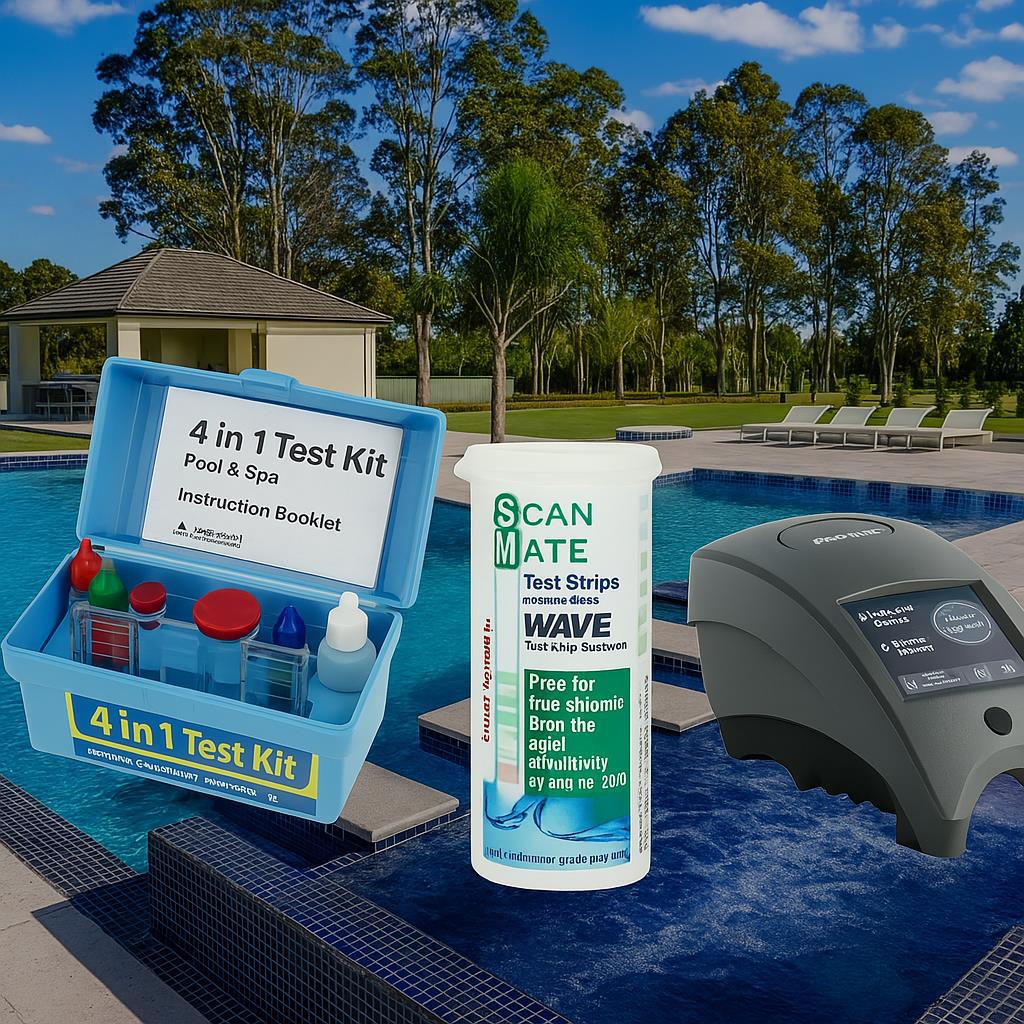
To maintain optimal pool water balancing, follow these best practices:
1. Use Reliable Testing Methods
2. Test at the Right Time
3. Store Testing Equipment Properly
4. Record and Track Results
“I will do water–beautiful, blue water.” – Claude Monet, was a French painter and founder of Impressionism painting
Even with regular testing, imbalances can occur. Here are some common issues and their solutions:
| Issue | Possible Cause | Solutions |
|---|---|---|
| Cloudy water | High pH, high calcium, or excess TDS | Adjust pH, lower calcium, or drain partial water. Ensure filters are clean. |
| Green water | Low chlorine or high PH or phosphates | Shock the pool and balance chemicals. |
| Skin irritation | Low pH, high chlorine or combined chlorine | Adjust pH to 7.4-7.6 and maintain chlorine balance. Non chlorine shock. |
| Scale formation | High calcium hardness or high pH | Reduce calcium levels and lower pH. |
| Metal staining | High iron or copper levels | Use a metal sequestrant. |
Maintaining proper pool water balancing is essential for a safe and enjoyable swimming experience. By testing key chemical levels regularly and adjusting as needed, pool owners can prevent common water problems and extend the lifespan of their pool equipment. Following a consistent testing schedule ensures that your pool remains crystal clear and healthy for everyone to enjoy.
For expert advice on maintaining your pool, consult our professionals at Jim’s Pool Care to ensure your water chemistry remains in top condition. Book for a call today to get assistance with your pool care needs!

We welcome your questions and feedback. We are here to help!
The frequency of pool water testing depends on several factors, including pool usage, weather conditions, and whether your pool is indoor or outdoor. Below is a recommended testing schedule based on best practices, but speak with your local pool expert to confirm for your city/state.
The ideal pH level for pool water is between 7.2 and 7.6. Keeping your pH within this range ensures swimmer comfort, prevents skin irritation, and protects pool equipment from corrosion or scaling.
Proper pool water balancing prevents issues like algae growth, cloudy water, scaling, and corrosion. It also ensures that sanitizers like chlorine work effectively, keeping your pool water safe, clear, and healthy for swimmers.
The key chemicals to monitor for pool water balance include:
Unbalanced pool water can cause several issues, including:
You can test your pool water using:
If pH is too high – Add pH decreaser (muriatic acid or sodium bisulfate)
If pH is too low – Add pH increaser (sodium carbonate)
If chlorine is low – Add chlorine shock treatment
If alkalinity is too low – Use baking soda (alkalinity increaser) to raise it
If calcium hardness is too high – Partially drain and refill your pool with fresh water
Weather plays a significant role in pool water chemistry:

Regular water testing is key to a healthy pool, but it takes time. Jim’s Pool Care offers professional pool maintenance services to keep your pool crystal clear—so you can simply enjoy it! Book a service now!
Get to know our studio before you commit to becoming a regular student. We can’t wait to meet you!