Essential winter pool maintenance is the secret to protecting your backyard investment and ensuring a smooth, hassle-free transition when the warm weather returns. Many Australian homeowners make the mistake of completely ignoring their pool once the temperature drops. However, cold weather, fallen autumn leaves, and heavy rainfall can quickly turn clear water into a costly maintenance nightmare. When left unchecked, according to the blog Winterpool Maintenance: How To Keep Your Pool In Top Shape Year-Round, can lead to algae, bacteria and a host of issues that are far harder (and more expensive) to deal with come summer.
By dedicating just a few minutes each week to simple DIY pool care, you can prevent scale buildup, protect expensive pool equipment, and avoid opening a swamp come spring.
“Winter is a season of recovery and preparation.” – Paul Theroux, an American novelist and travel writer

What You Need Before You Start
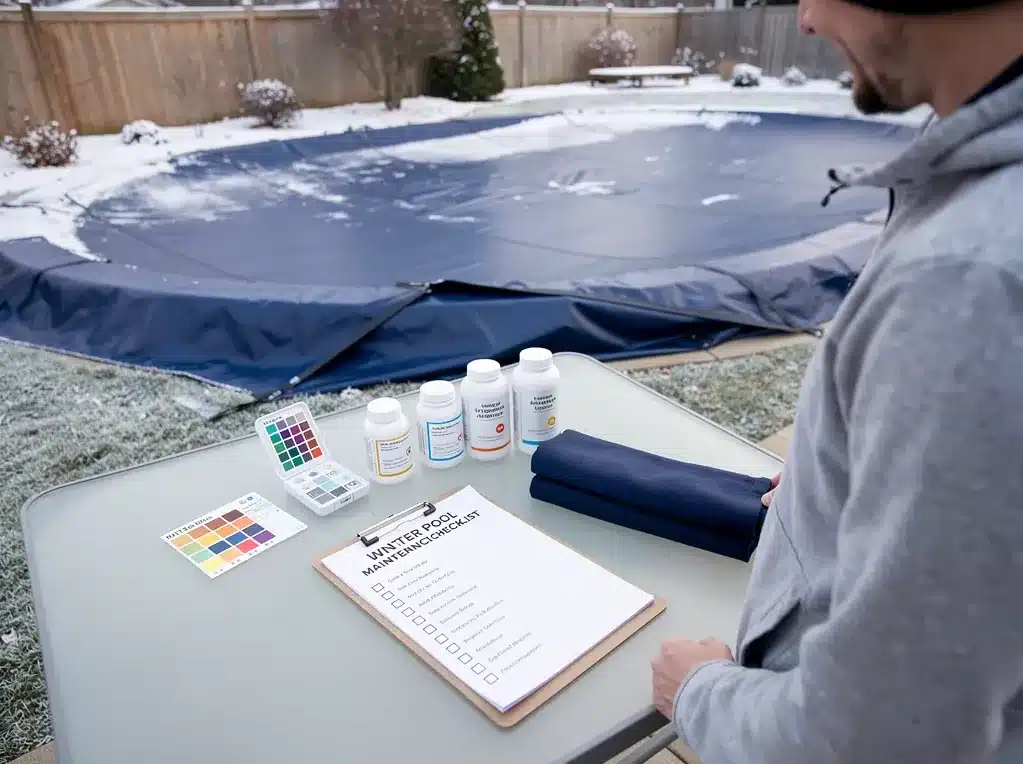
Preparation determines whether your pool survives the colder months without expensive structural or chemical damage. Having the right tools on hand avoids a frantic dash to the local shop when heavy rain dilutes your chemicals or cold snaps threaten your filtration unit.
The essentials break down into three primary categories:
- Water Testing Equipment: A reliable test kit or water testing strips to check sanitiser levels and chemical balance weekly.
- Pool Cover: A heavy-duty winter pool cover without tears or holes to block leaves, wandering debris, and rainwater.
- Chemical Supplies: Adequate stock of liquid chlorine, shock treatment, and pH buffer products for regular top-ups.
Performing DIY Winter Pool Maintenance Step by Step
To keep your water crystal clear, follow this logical, five-step sequence throughout the off-season. Each step protects your water quality and keeps your system operational without racking up excessive electricity bills.
Step 1: Adjust Pump Run-Time
Rather than shutting down your pool filtration system entirely, simply reduce the operational hours. Operating your pump for four to six hours daily during daylight hours keeps the water moving while keeping energy costs low.
Step 2: Keep the Water Circulating
Continued circulation distributes your pool sanitiser evenly across every corner of the pool. Skipping circulation creates dead spots in still water where algae growth and organic debris settle undisturbed.
Step 3: Balance the Chemistry
Regularly test and adjust your water parameters. Maintaining correct chemical balance prevents water staining, metal fitting corrosion, and calcium scaling on your pool surface. A blog by The Pinnacle List recommends checking the chemical levels twice a week during summer and once a week in winter.
Step 4: Clear Water From the Pool Cover
Rain and condensation collect on top of winter covers over the season. Use a small submersible pump or cover siphon to remove excess weight, preventing tears in the material and stopping dirty water from spilling into the pool.
Step 5: Perform Visual Equipment Checks
Inspect your pool pump, filter pressure gauge, and skimmer box weekly. Clear out trapped leaves from the baskets to ensure water flows freely without putting extra strain on the pump motor.
Recommended Winter Water Chemistry Targets
To prevent chemical drift during the colder months, keep your key water parameters within these optimal Australian industry ranges:
| Chemical Parameter | Ideal Winter Target | Purpose |
|---|---|---|
| Free Chlorine | 2.0 to 4.0 ppm | Prevents algae spores and organic bacteria from taking hold. |
| pH Level | 7.2 to 7.6 | Protects equipment from corrosion and prevents eye/skin irritation. |
| Total Alkalinity | 80 to 120 ppm | Acts as a buffer to stop drastic, unpredictable pH swings. |
| Calcium Hardness | 200 to 400 ppm | Stops soft water from etching plaster or concrete pool surfaces. |
Why Pools Need Weekly Testing in Winter
Even when nobody is swimming, chemical levels drift due to rainfall, organic debris, and fluctuating outdoor temperatures. Unchecked drift creates an ideal environment for persistent green pool issues or hard mineral scale buildup.
A quick weekly check allows you to catch minor shifts early and correct them with small adjustments, rather than spending hundreds of dollars on heavy chemical doses when spring arrives.
Common Winter Maintenance Mistakes to Avoid
Neglecting your pool during winter always costs more time and money in the long run. Watch out for these common traps:
- Turning Off the Pump Completely: Stagnant water quickly breeds bacteria and algae, even in cold climate conditions.
- Ignoring Water Balance After Heavy Rain: Rainwater is naturally acidic and dilutes your sanitiser levels rapidly.
- Leaving Leaves in the Skimmer Basket: Rotting organic matter alters pH levels and can cause severe surface staining.
- Allowing Chlorine Levels to Drop: Algae cells double rapidly during unexpected warm spells, shifting a pool from clear to murky within days.
Keeping Your Pool Healthy Year-Round
Consistency is the absolute key when it comes to seasonal care. Taking a proactive approach through routine skimming, regular chemical testing, and sensible pump management ensures your backyard pool remains a clean, inviting asset rather than a stressful chore. By taking control of your daily routine and executing proper winter pool maintenance, you safeguard your machinery, protect your water quality, and guarantee that your pool is completely ready for that very first warm swim of summer.
For winter pool maintenance and care, our experts at Jim’s Pool Care are here to help keep your water crystal clear and your equipment protected all off-season long. Book now or request a call today!
Frequently Asked Questions
Yes, you should never turn your pool pump off completely during winter. Running your filtration system for 4 to 6 hours daily during daylight hours ensures essential water circulation, prevents stagnant dead spots, and distributes sanitiser evenly to stop algae from growing.
You should test your pool water once a week during the colder months. Even though nobody is swimming, factors like heavy rainfall, fallen leaves, and cold snaps alter your pH, total alkalinity, and sanitiser levels, which can cause scale buildup or severe water staining if left unchecked.
To protect your pool surface and equipment over winter, target these core parameters:
Free Chlorine: 2.0 to 4.0 ppm
pH Level: 7.2 to 7.6
Total Alkalinity: 80 to 120 ppm
Calcium Hardness: 200 to 400 ppm
A pool turns green in winter when chlorine levels drop and circulation is reduced. Algae spores thrive in unchlorinated, still water, and warmer sunny winter days can cause algae to double in mass rapidly. Regular water testing and reduced pump run-times prevent this issue.
Yes, using a high-quality winter pool cover is highly recommended. A cover blocks autumn leaves, organic debris, and dirt from entering the water, reduces chemical evaporation, and prevents rainwater from altering your pool’s chemical balance.
Rainwater and condensation naturally accumulate on top of pool covers over time. Use a small submersible pump or cover siphon to drain the standing water. Removing this excess weight prevents tears in the cover material and stops dirty runoff from spilling back into your clean pool water.
Rainwater is naturally acidic and dilutes your pool’s sanitiser levels while lowering total alkalinity. After heavy rain, always perform a quick test to balance your pH with a pH buffer and top up your chlorine levels to protect against sudden algae outbreaks.
The single biggest mistake is neglecting the pool entirely until spring. Ignoring chemical balance or turning off the pump leads to costly problems like algae blooms, metal fitting corrosion, and permanent calcium scaling on pool walls that require expensive treatments to fix later.
Heavy rain and fluctuating temperatures can quickly turn clear water murky. Skip the trial and error with store-bought chemicals. Our mobile specialists at Jim’s Pool Care deliver expert water balancing and green pool prevention straight to your door with fast response times.