
“Well, This is definitely the best service I’ve ever encountered with a pool Cleaning company. Ricky was absolutely amazing. Was on time, polite and did a wonderful job. I would…

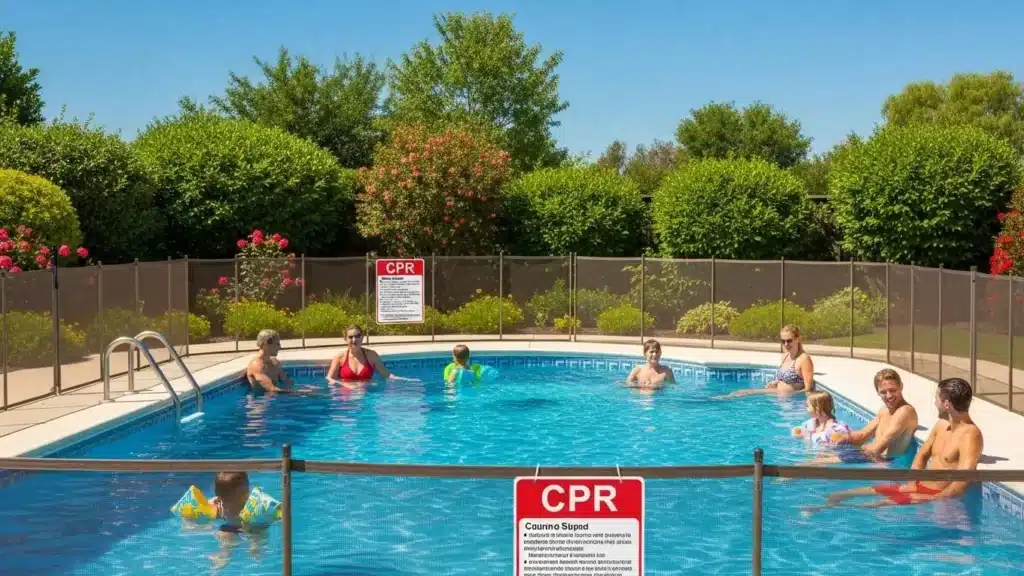
For first-time pool owners in Australia, pool safety tips are not just helpful advice, they’re an essential part of responsible pool ownership. A pool brings endless enjoyment for families, kids, and guests, but it also comes with a duty of care that should never be taken lightly. From installing the right fencing to understanding your legal obligations, getting pool safety right from the start sets the foundation for years of worry-free swimming.
“Safety is a common denominator across all aspects of life. It is not a matter for industry, it is a matter for humanity.” – Doug Bourne
The first step in creating a safe pool environment is putting the right physical safeguards in place. These aren’t optional extras — in most Australian states and territories, many of these measures are a legal requirement:
Getting these fundamentals right is the single most impactful thing a first-time pool owner can do to prevent accidents.
Pool fencing regulations in Australia vary by state and territory, but the core requirements are consistent across the country. All pool barriers must meet minimum height standards, use materials that cannot be easily climbed, and include self-closing, self-latching gates. In addition, according to the Queensland Government, the barrier must be well maintained at all times.
New pool owners should familiarise themselves with their local council requirements as soon as possible and schedule an inspection to confirm compliance. Non-compliant pool fencing isn’t just a safety risk, it can also result in significant fines. When in doubt, consult a qualified pool safety inspector who can assess your setup and advise on any necessary upgrades.
No amount of fencing or safety equipment replaces active, attentive supervision. Drowning prevention statistics in Australia consistently show that most incidents involving young children occur when supervision lapses, even briefly.
Whenever children are in or near the pool, a designated responsible adult should be actively watching. This means no distractions, no phones, no conversations that take your eyes off the water. Drowning can occur quickly and silently, making constant vigilance absolutely essential.
In fact, according to the blog Active vs Passive Supervision at the Pool, active supervision is not about being near the pool. It is about being present with your child in a specific, measurable way.
Pool water safety goes beyond just keeping the water clean and clear. Proper water chemistry is essential for the health and safety of everyone who swims. Imbalanced water can cause skin and eye irritation, encourage the growth of harmful bacteria, and reduce water clarity, making it harder to see the pool floor in an emergency.
Key water maintenance habits include:
Clear water isn’t just an aesthetic preference, it’s a safety requirement.
Regular pool maintenance safety practices are what keep a pool safe, functional, and compliant over the long term. A well-maintained pool is a safe pool. Here’s what should be on every pool owner’s maintenance checklist:
For pool owners who prefer to leave the upkeep to the experts, professional pool maintenance services offer regular inspections and servicing to keep everything running safely and smoothly.
Beyond fencing and gates, investing in the right swimming pool safety equipment adds additional layers of protection for your family and guests:
“Safety First” is “Safety Always.” – Charles Melville Hays, a business professional
Being prepared for an emergency is just as important as preventing one. Every pool owner should know CPR and ensure that at least one other household member is also trained. Display your CPR sign prominently and make sure all family members know where rescue equipment is kept.
Establishing clear family pool safety rules also plays a big role in accident prevention:
Pool ownership is one of life’s great pleasures, and with the right approach to safety, it stays that way. By putting compliant barriers in place, staying on top of maintenance, understanding your pool safety regulations, and fostering a culture of awareness around the water, first-time pool owners can confidently enjoy everything their pool has to offer.
Need help keeping your pool safe, clean, and compliant? Our local, owner-operated technicians at Jim’s Pool Care are ready to help, fast, friendly, and professional service that comes straight to you. Book now!
We welcome your questions and feedback. We are here to help!
The essentials include installing compliant pool fencing, ensuring gates are self-closing and self-latching, displaying a current CPR sign near the pool, and always supervising children around the water. Understanding your local pool safety regulations is equally important.
Pool fencing must be at least 1.2 metres high with no gaps greater than 100mm, built from non-climbable materials, and fitted with self-closing, self-latching gates. Requirements can vary by state and territory, so always check with your local council for specific compliance standards.
Pool water should be tested at least once a week during the swimming season. Regular testing keeps chemical levels balanced, prevents harmful bacteria growth, and ensures the water remains clear and safe for swimming.
First-time pool owners should have:
Pool alarm systems detect movement in or around the pool and alert homeowners immediately. They’re a valuable addition to any pool safety setup, particularly during unsupervised hours, though they should always complement, not replace, physical barriers and active supervision.
Always have a designated adult actively supervising children near the pool, enforce clear pool rules, ensure fencing and gates are compliant, and make sure at least one household member knows CPR. Teaching children water safety habits from an early age also makes a big difference.
Weekly maintenance keeps water chemistry balanced and equipment running correctly. A thorough monthly inspection of barriers, gates, and equipment is also recommended, along with an annual professional inspection to confirm full compliance with Australian safety regulations.
Every pool owner should have:
Don’t wait for an accident to happen before taking pool safety seriously. Get your pool inspected by Jim’s Pool Care today and make sure your family is protected from day one. Book now!
Get to know our studio before you commit to becoming a regular student. We can’t wait to meet you!