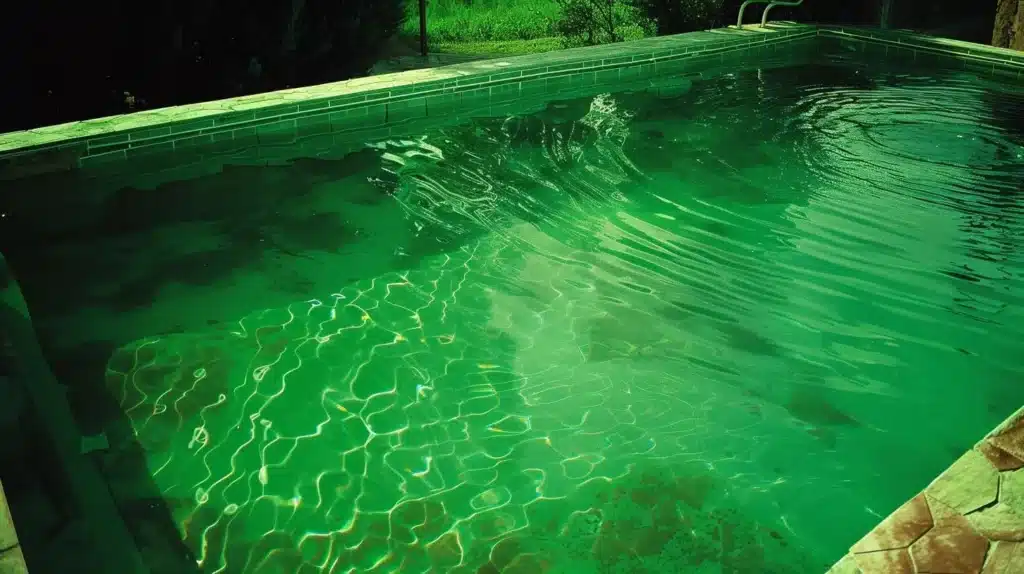
Green pool recovery is something thousands of Australian pool owners face every year, often after a period of neglect, a stretch of wet weather, or simply losing track of the maintenance routine. The result is always the same: a pool that’s gone from sparkling blue to an uninviting shade of green. The good news is that recovery is absolutely possible, and the stories below prove it.
These real-world scenarios reflect the kinds of situations pool technicians encounter regularly across Australia. Each case highlights a different cause, a different level of severity, and a different path back to a clean, swim-ready pool.

“The perfect pool is bright, but it has no color.” – John Tranter, as an Australian poet, publisher and editor
Case Study 1: The Neglected Holiday Pool
The Situation
A family in suburban Brisbane returned from a three-week holiday to find their pool had turned completely green. The automatic chlorinator had run out of chlorine partway through their trip, and several days of summer rain had done the rest.
The Problem
Testing revealed severely low chlorine levels, a pH reading of 7.9, and a significant algae bloom across the walls and floor of the pool. The filter pressure was running high, indicating the cartridge filter was clogged with debris.
The Recovery Process
The technician followed a structured green pool recovery process:
- Cleaned and backwashed the filter before beginning any chemical treatment
- Adjusted the pH down to 7.2 to improve chlorine effectiveness
- Applied a large dose of liquid chlorine (shock treatment) to begin killing the algae
- Added a quality algaecide to prevent regrowth
- Brushed the pool walls and floor to break up algae deposits
- Ran the filter continuously for 48 hours
- Vacuumed debris to waste once the algae had died off
The Outcome
Within 72 hours, the pool had cleared significantly. By day five, it was back to full clarity and safe for swimming.
Key Takeaway: Even a severely green pool can recover quickly with the right chemical sequence and continuous filtration. Preparation before a holiday, including topping up the chlorinator and checking equipment, could have prevented this entirely.
Case Study 2: The Persistent Green Pool
The Situation
A homeowner in Melbourne had been battling a green-tinted pool for nearly two months. Despite repeatedly adding chlorine, the water refused to clear. They had been managing the pool themselves and were frustrated with the lack of results.
The Problem
Upon inspection, the issue wasn’t a lack of chlorine, it was chlorine lock, also known as chlorine demand. The combined chlorine levels (chloramines) were extremely high, rendering the free chlorine ineffective. The pool also had a significant build-up of phosphates, which were acting as a food source for algae.
The Recovery Process
- Conducted a full water chemistry analysis to identify the root cause
- Performed a break-point chlorination treatment to eliminate chloramines
- Applied a phosphate remover to starve the algae of nutrients
- Shocked the pool with a high dose of granular chlorine
- Cleaned the filter thoroughly and checked for any equipment faults
- Tested and adjusted all chemical levels daily over five days
The Outcome
After two weeks of corrective treatment, the pool returned to crystal clear water. The homeowner was also educated on the importance of testing all chemical parameters, not just chlorine, to avoid a repeat situation.
Key Takeaway: Throwing more chlorine at a green pool doesn’t always work. Understanding the full picture of your water chemistry is critical to an effective recovery.
Case Study 3: Post-Storm Green Pool Recovery
The Situation
A pool owner in Sydney’s western suburbs experienced severe pool contamination following a major storm. Debris, dirt, and runoff had flooded into the pool, turning it dark green within 24 hours.
The Problem
The storm had introduced a high organic load into the pool, rapidly consuming available chlorine and spiking the pool’s phosphate and nitrogen levels. The pool water balance was completely off, and the filter was overwhelmed with debris.
The Recovery Process
- Removed large debris manually using a net before any chemical treatment
- Cleaned the filter and set it to run continuously
- Tested and recorded baseline chemistry readings
- Added a flocculant to help suspended particles sink to the bottom
- Shocked the pool aggressively with liquid chlorine over two consecutive days
- Vacuumed to waste once particles had settled
- Re-tested and adjusted pH, alkalinity, and stabiliser levels
The Outcome
Full recovery was achieved within four days. The pool was back to safe swimming conditions before the weekend.
Key Takeaway: Post-storm recovery requires dealing with the physical debris first before chemical treatment can be effective. Skipping that step prolongs the recovery process significantly.
“When you do things the right way it will take longer, just trust the process!” — Hopal Green
Green Pool Recovery at a Glance
The table below summarises the three case studies and their recovery timelines:
| Case Study | Primary Cause | Key Treatment | Recovery Time |
|---|---|---|---|
| Neglected Holiday Pool | Chlorine depletion and algae bloom | Shock treatment, algaecide, continuous filtration | 5 days |
| Persistent Green Pool | Chlorine lock and high phosphates | Break-point chlorination, phosphate remover | 14 days |
| Post-storm Pool | Organic overload and debris contamination | Flocculant, shock treatment, vacuum to waste | 4 days |
What These Stories Have in Common
Across all three case studies, a few consistent themes stand out:
- Correct diagnosis comes first. Treating the wrong problem wastes time and money.
- Filter maintenance runs parallel to chemical treatment. A clogged filter will undermine even the best chemical programme.
- Water testing is non-negotiable. You cannot fix what you haven’t properly measured.
- Patience and consistency matter. Green pool recovery rarely happens overnight, but with the right approach, it always happens.
When to Call a Professional
Some green pools are straightforward enough for a confident DIYer to handle. Others, particularly those involving algae resistance, persistent chemical imbalances, or equipment faults, are best handled by a qualified pool technician.
A professional brings accurate water testing equipment, the right chemicals in the right quantities, and the experience to read a pool’s condition quickly. For severe cases, professional intervention can actually shorten the recovery time and reduce the overall cost of chemicals used.
If your pool has been green for more than a week despite your best efforts, or if you’re unsure where to start, it’s worth getting a local pool care expert on site to assess the situation.
Jim’s Pool Care technicians are local, mobile, and experienced in all levels of green pool recovery across Australia. Whether it’s a post-storm rescue or a long-neglected pool, they carry everything needed to get your pool back to blue. Book now!
Frequently Asked Questions
A pool turns green when algae grows due to low chlorine levels, poor circulation, or unbalanced water chemistry. Heavy rainfall, storm runoff, and neglected maintenance are the most common triggers. The longer it goes untreated, the worse it gets.
It depends on the severity. A straightforward chlorine depletion case can clear in 3 to 5 days. More complex issues like chlorine lock or post-storm contamination can take up to 14 days with consistent treatment.
No. Green pool water can harbour harmful bacteria and cause skin irritation and eye infections. Always wait until the water has fully cleared and chemical levels are back within safe ranges before swimming.
Chlorine lock occurs when high levels of chloramines build up, making free chlorine ineffective. Adding more chlorine won’t solve it. The fix is break-point chlorination, which eliminates chloramines and restores your sanitiser’s effectiveness.
Start by removing large debris, then clean the filter before adding any chemicals. Test the water, adjust pH to around 7.2, apply shock treatment and algaecide, and run the filter continuously. Brush walls and floor daily, vacuum to waste once algae dies off, and re-test throughout.
The likely causes are chlorine lock, high phosphate levels, or a filtration problem. Adding more chlorine without identifying the root cause won’t work. A full water chemistry test is the only reliable way to determine the correct treatment.
Phosphates enter the pool through debris, fertiliser runoff, and rainwater. They feed algae, making it harder to eliminate even in chlorinated water. Applying a phosphate remover as part of your treatment starves the algae and improves chlorine effectiveness significantly.
Call a professional if the pool has been green for more than a week despite treatment, if chemical levels remain unstable, or if you suspect an equipment fault. A qualified technician can diagnose the issue accurately and often shorten recovery time while reducing chemical costs.
Tried everything and your pool is still green? If chlorine alone isn’t clearing your pool, there’s likely an underlying issue that needs professional diagnosis. Our local, mobile pool technicians at Jim’s Pool Care can identify the root cause and apply the right treatment plan fast. Book a service today!